The Late Summer Date Night Problem: Warm Outside, Freezing Inside

Quick Answer: Late summer evenings have a bigger indoor-outdoor temperature gap than any other time of year — often 15 to 20 degrees. Solve it with one intentional third piece that reads as styling rather than function: a fine-gauge knit, a structured shirt worn open, or a lightweight blazer in a fluid fabric. The base outfit should work fully on its own, so the layer is an addition, not a rescue.
You walk six blocks in 86-degree air, arrive glowing, and then spend the next ninety minutes under a vent set to 68.
This is the specific problem of late August, and the fix is not a cardigan you hate the look of.
Why is late summer harder to dress for than actual summer?
Because the gap between outdoor and indoor conditions peaks right now.
In July, everyone has accepted it is hot and air conditioning runs constantly. In October, outdoor and indoor temperatures converge and a single layer covers both. Late August is the widest split of the year — genuinely hot outside, aggressively cooled inside, and often with high humidity that makes the transition feel more extreme than the numbers suggest.
There is a second complication that is easy to miss. In late summer you arrive somewhere slightly damp, and a damp base layer under strong air conditioning is dramatically colder than a dry one. This is the same evaporative cooling that makes a wet shirt feel cold in a breeze, and it is why you can be genuinely uncomfortable indoors at a temperature that would be fine on any other day.
That gives you two problems to solve at once, not one:
Problem one is the temperature swing, which a third piece handles.
Problem two is base layer moisture, which fabric choice handles. A base that dries fast and does not hold moisture against the skin makes the indoor half of the evening far more comfortable — this is where technical fabrics quietly outperform the cotton tank most people reach for.
Solve both and the third piece becomes optional rather than essential, which is exactly where you want to be.
What third piece actually works for date night athleisure?
The requirement is specific: it has to read as a deliberate style choice, not as something you grabbed because you were cold. Three options meet that bar.
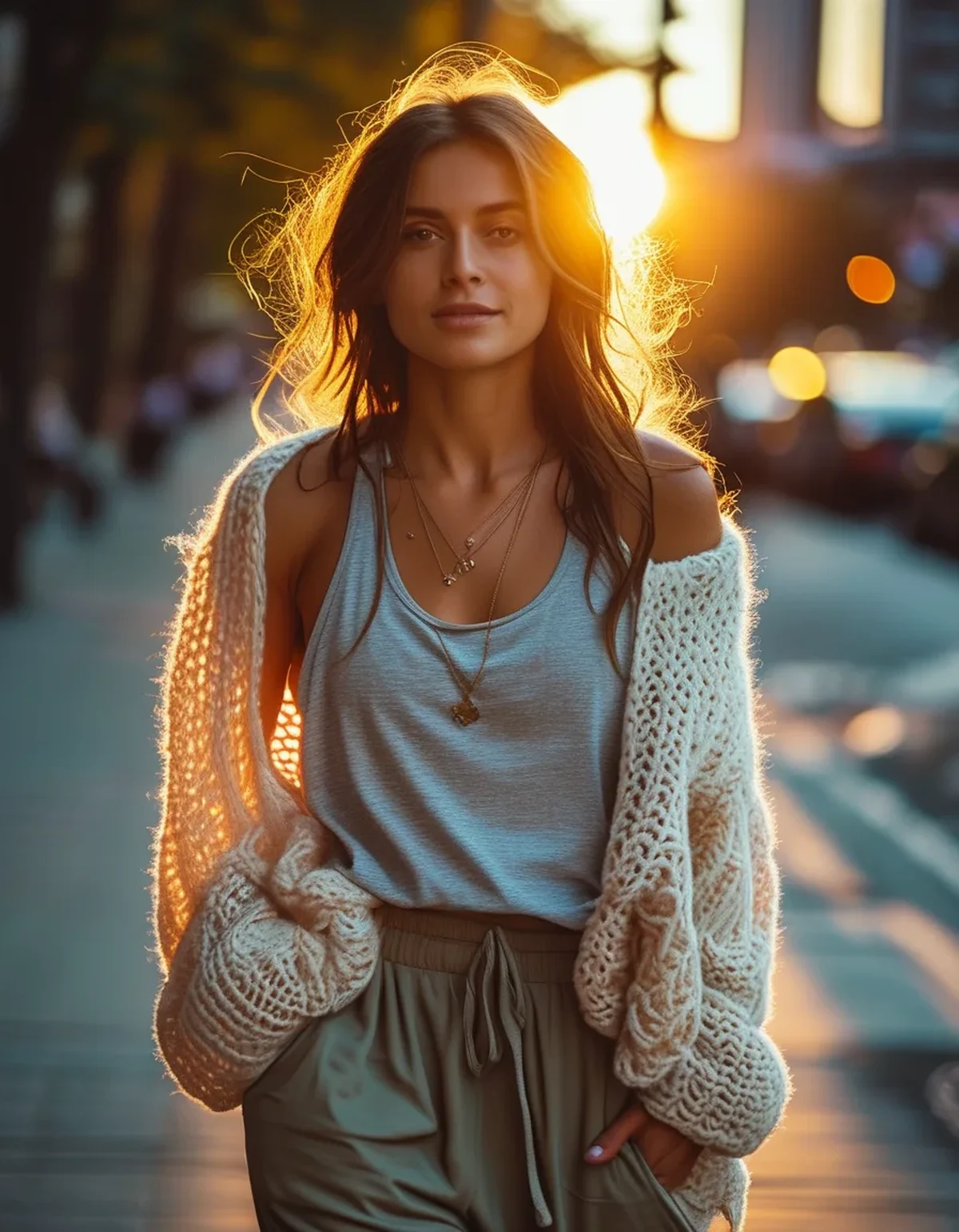
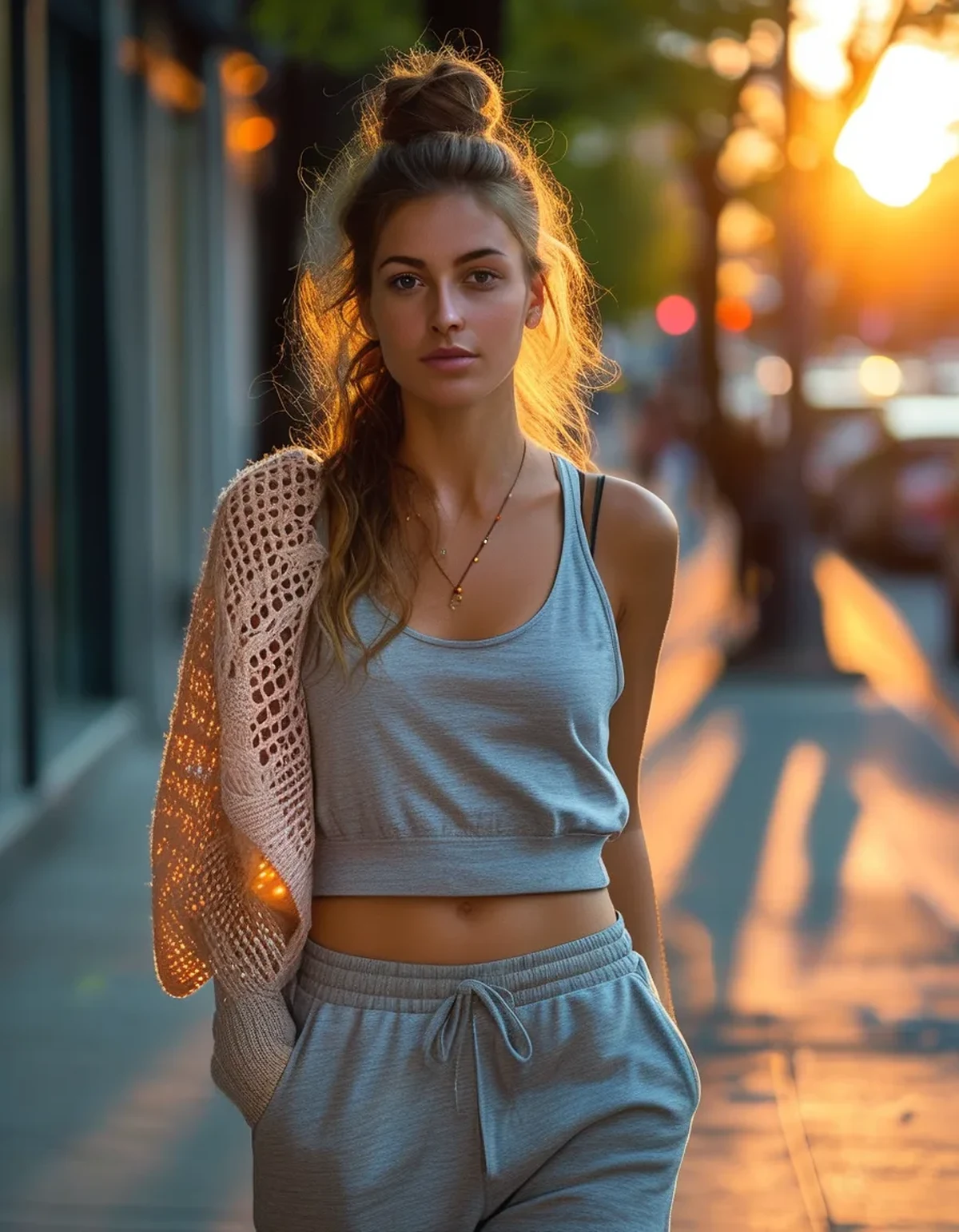
1. A fine-gauge knit in a good fiber. Merino, cashmere blend, or a quality fine cotton — the key is gauge, not warmth. A thin knit drapes close to the body and reads as intentional; a chunky one reads as outerwear worn indoors. It also packs down small enough to hold or drape over an arm without looking like luggage, which matters for the outdoor half of the evening.
2. A structured shirt worn open over the outfit. A crisp cotton poplin or a fluid silk-blend shirt, unbuttoned, sleeves pushed. This is the most versatile of the three because it works fully open in warm air and closed or half-buttoned indoors. It also adds vertical lines, which is why it elevates a simple base so effectively.
3. A lightweight blazer in a fluid fabric. Not a structured suiting blazer, which will look severe over athleisure and be too warm outdoors. Look for an unlined or half-lined blazer in a fabric with drape — a soft crepe or a lightweight tencel blend. This is the strongest option for restaurants with a stricter dress code.
What to avoid: hoodies of any kind, athletic zip-ups, oversized cardigans, and anything with visible technical branding. These are the pieces that instantly reclassify the whole outfit as gym clothes with a nice shoe.
The fabric test that predicts everything: hold the piece up and let it fall. If it drapes and moves, it will elevate the outfit. If it holds its shape stiffly, it will fight the softness of the athleisure underneath and read as mismatched.
How should the base outfit change for this weather?
The base has to work on its own, since you will spend half the evening without the layer.
Prioritize a base that dries fast. A technical-blend tank or a fine merino tee outperforms cotton dramatically here — not because cotton is bad, but because cotton stays damp and damp under air conditioning is what makes you cold. This is the highest-value swap on the list and the least obvious.
Choose darker or patterned fabric on the torso. Late summer sweat marks are a real consideration and light solid colors show them. Navy, black, deep olive, and small-scale prints handle it invisibly.
Go with a fuller leg rather than a compressive one. A wide-leg pant or a fluid jogger moves air, reads as more elevated than a legging, and photographs better. If you are wearing leggings, a longer top that covers the hip changes the register substantially.
Shoes carry the outfit more than any other piece. A leather sneaker in a clean color, a flat mule, or a low block heel all move athleisure toward evening. Running shoes undo everything else you did — this is the single most common failure point.
Skip static-prone synthetics on the bottom half. Late summer humidity actually suppresses static, so this is less of an issue now than it will be in six weeks, but a fabric that clings in a dry restaurant is worth avoiding.
One accessory doing real work beats three doing a little. A structured bag, a single strong earring, or a good belt — pick one focal point. Athleisure gets crowded fast.
What Nobody Tells You About Dressing for Temperature Swings
The damp base layer is the actual villain, not the air conditioning. Solving moisture solves most of the discomfort, and almost nobody addresses it because it happens on the walk over, not at the table.
Arriving ten minutes early to cool down changes everything. Sitting for a few minutes in a lobby or at the bar lets your body temperature normalize before you settle in. The outfit works better when you are not still shedding heat from the walk.
Restaurants are colder near vents and windows, and it is not random. If you are cold-sensitive, asking for a table away from the vent is normal and completely unremarkable to request.
Bare shoulders and bare arms are not equivalent. Shoulders lose heat much faster, which is why a strapless or halter neckline feels far colder indoors than a tank with a standard strap. If you are wearing something shoulder-bare, the third piece is not optional.
A layer you carry needs to look good carried. You will hold it for half the evening. Fine knits drape over an arm elegantly; blazers do not, and structured jackets look worst of all. Factor in how it looks in your hands, not just on your body.
Ankles matter more than expected under a table. A cropped pant that is perfect outside can be noticeably cold indoors with air moving at floor level. Full length or a longer crop is the safer call for a long dinner.
The transition to fall is about three weeks away, not now. It is tempting to reach for autumn pieces in late August, but 86 degrees is still 86 degrees. Seasonal fabrics before the weather actually turns is the fastest way to be uncomfortable and look like you are trying too hard.
How do you plan the whole evening rather than the outfit?
The outfit should be chosen against the actual shape of the night.
If it is mostly outdoors — a walk, a patio, an outdoor bar: prioritize the base and treat the layer as insurance. Fine knit over the arm, and you will likely never put it on. Fabric breathability matters more than anything else.
If it is mostly indoors — dinner, a movie, a gallery: the layer is doing real work for hours. Choose the blazer or the structured shirt, both of which look intentional worn for a whole evening. A knit that reads as “cold and coping” for two hours is the wrong choice here.
If it is genuinely split — drinks outside then dinner inside: this is where the open shirt earns its place, because it functions in both modes without changing the outfit’s register.
If there is any chance of dancing or a lot of walking: shoes decide the night. A block heel under two inches or a good flat leather sneaker keeps you comfortable without dropping the outfit into gym territory.
A rough gauge for the swing: if the forecast high is above 80°F, assume at least a 15-degree drop indoors and plan the layer. Below 75°F, a single well-chosen outfit usually covers the whole evening.
The underlying principle is straightforward: build an outfit that works fully at both temperatures, with the layer as an addition rather than a repair. When the layer is doing rescue work, everyone can tell.
FAQ: Late Summer Date Night Outfits, Answered
Can I wear leggings on a date night?
Yes, with two conditions: a top that covers the hip and hits at a deliberate length, and shoes that are not athletic. A legging with a fine knit and a leather mule reads completely differently from a legging with a hoodie and running shoes.
What if the restaurant has a dress code?
A lightweight blazer over an elevated base clears most “smart casual” codes comfortably. If the code is stricter than that, athleisure is probably the wrong starting point for that particular venue rather than something to solve with a layer.
How do I stop looking like I came from the gym?
Three things do most of the work: non-athletic shoes, a non-athletic third piece, and no visible technical branding. Fix those and the base layer can be as sporty as you like.
Is it too early for fall fabrics?
Yes, in most of the US. Late August is still full summer in practice — save the heavier knits and boots for when the evening air actually cools. A fine-gauge knit is the appropriate weight for now.
TL;DR: Late summer has the year’s widest indoor-outdoor temperature gap, and one good third piece solves it.
- Choose a fine-gauge knit, an open structured shirt, or a fluid unlined blazer. Skip hoodies and athletic zip-ups entirely.
- The damp base layer is the real problem — a fast-drying technical or merino base beats cotton by a wide margin under air conditioning.
- The base outfit must work alone, because you will spend half the evening without the layer.
- Shoes decide whether it reads as evening or gym. Leather sneaker, mule, or low block heel.
- Bare shoulders get cold far faster than bare arms — if the neckline is shoulder-bare, the layer is mandatory.
- Choose based on the shape of the night, indoor-heavy versus outdoor-heavy, not on the outfit alone.
Swap the cotton tank for a fast-drying base first. It fixes more of the evening than the layer does.
See It in Motion
Seen here: High Waist Yoga Leggings with Side Pockets — shop it on bubblelime.com
Keep Reading
This article is for general informational and styling purposes only. Fit, sizing, and product availability may vary.