Athleisure for a Date That Starts Outside and Ends Inside

Quick Answer: The outfit needs to work at two temperatures and under two very different light sources. Build it around a fitted base that reads as clothing rather than gym kit, a mid layer you can remove without ruining the look, and one non-athletic element - shoes, bag, or jewelry - that anchors it. Avoid technical fabrics with visible sheen, which look sporty outdoors and shiny under warm indoor light.
Early autumn is the hardest version of this: warm at 6pm, genuinely cool by 9.
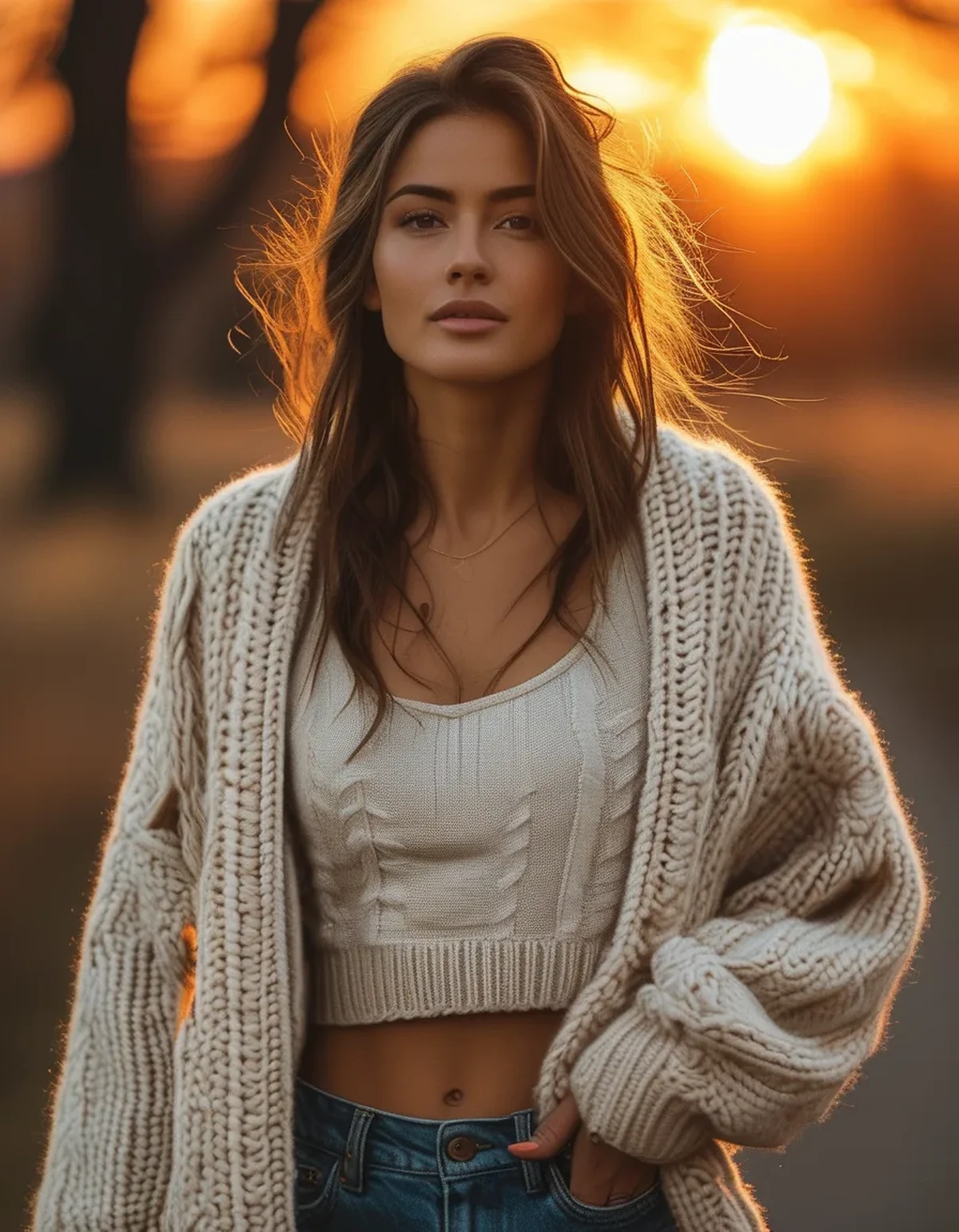
What actually changes between outdoors and indoors?
Two variables, and most outfits are built for only one of them.
Temperature. An early-autumn evening can drop 10 to 15 degrees Fahrenheit between sunset and 9pm, while a restaurant interior sits at a constant comfortable temperature. So you need insulation you can take off, and what is underneath has to be presentable on its own.
Light. This is the one people miss. Outdoor light at golden hour is warm, diffuse, and flattering to almost everything. Indoor restaurant lighting is typically warm but directional and low, coming from above. Directional overhead light does two things: it emphasizes texture, and it produces specular highlights on any shiny surface.
That second effect is why a legging that looks matte and expensive outdoors can look distinctly gym-like under a pendant lamp. High-sheen technical fabrics - anything with a slight satin finish - reflect overhead light in a way that reads as athletic.
The rule that follows: matte fabrics for evening, sheen for daytime. A matte brushed or peached finish looks like clothing under any light. A slick performance finish only looks right in diffuse daylight.
What is the actual three-piece formula?
The base: a fitted piece in a matte fabric and a solid color that is not black-with-visible-logo. A ribbed knit top, a fine-gauge bodysuit, or a matte crossover-neck long sleeve. It must be complete on its own, because it will be the whole top half indoors.
The bottom: a wide-leg or straight-leg pant in a heavier matte knit, or a well-fitting flare. Straight and wide legs read as trousers under low light; a tight legging reads as a legging. If you want the legging, pair it with a longer top and boots so the proportion carries it.
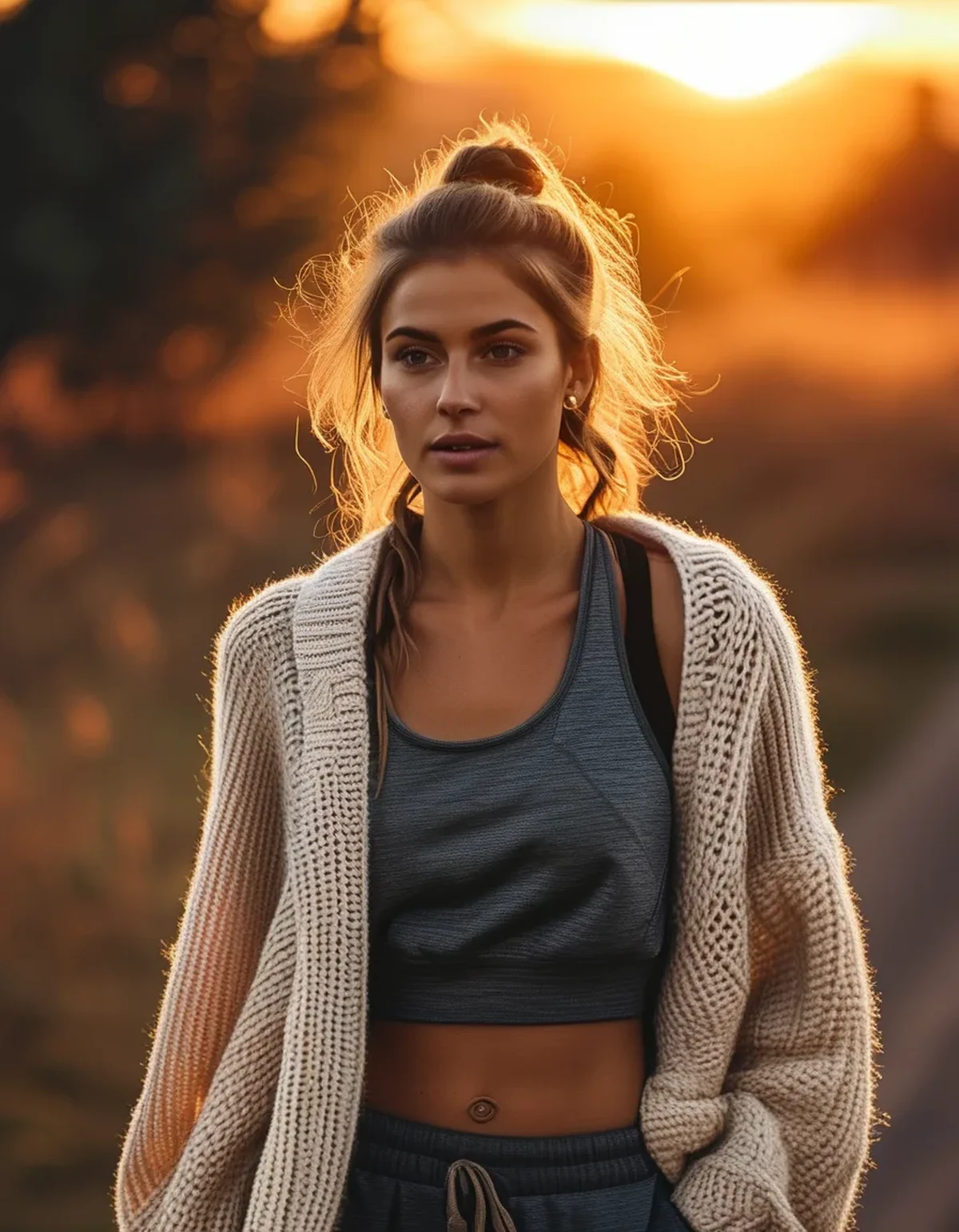
The removable layer: a fine knit cardigan, an oversized shirt, or an unstructured blazer. Not a technical jacket, not a hoodie. The layer’s job is warmth outside and the ability to be taken off and draped without looking like you brought gym kit to dinner.
Plus one anchor. One non-athletic element that tells everyone the outfit is a choice. Leather or suede shoes rather than trainers, a structured bag, or a single substantial piece of jewelry. One is enough - two or more starts to look like a costume built around the athleisure rather than an outfit.
Total: three garments and one accessory, all of which work independently.
What Nobody Tells You About Sitting Down
Most date outfits are evaluated standing in a mirror and then worn sitting for two hours.
Sitting changes several things that matter.
Rise becomes visible. A mid-rise legging that sits perfectly standing can gap at the back when seated, particularly in a low chair or a booth. High-rise is genuinely more reliable for a seated evening.
Waistbands compress. A compressive activewear waistband over a meal is a different experience than the same waistband during a workout. Anything that felt slightly snug at 6pm will feel considerably worse at 8:30. Choose a waistband you can forget about.
Fabric drape collapses. Wide-leg pants that hang beautifully standing pool at the ankle when seated and lose their line. Not a problem, but worth knowing so you are not surprised by a photo.
The layer needs somewhere to go. A cardigan you can drape over a chair back is easy. A puffer is not. This is a real argument for the fine knit over anything technical.
The simple test before leaving: put the whole outfit on and sit in a low chair for two minutes. Almost every problem shows up in that two minutes, and none of them show up in the mirror.
How do you handle the temperature drop specifically?
By insulating the parts that lose heat fastest rather than adding bulk everywhere.
Heat loss is disproportionately from the head, neck, hands, and ankles - areas with high surface area to volume and blood vessels close to the surface. A thin scarf does more for perceived warmth than a substantially thicker jacket, at a fraction of the visual bulk.
Specific moves that work for this transitional season:
- A fine-knit scarf or a silk one - packs to nothing, transforms how a cool evening feels, and comes off in a second indoors.
- Full-length rather than cropped bottoms. Exposed ankles are the single biggest source of feeling cold in early autumn, and cropped lengths are the default in most activewear.
- A long-sleeve base rather than short with a heavy layer. Sleeves under the layer means removing the layer indoors leaves you covered.
- Closed shoes. The transition from sandals is the clearest seasonal signal in an outfit and it is genuinely warmer.
One thing to skip: gloves, which are hard to store and which most people do not need until it is properly cold.
The overall principle is thin layers with high coverage, not one thick layer. It handles the swing better and it packs down when you no longer need it.
FAQ: Outdoor-to-Indoor Athleisure Questions
Can I wear trainers at all?
Yes, if they are clean, minimal, and leather or suede rather than mesh. A mesh running shoe reads as athletic in any lighting. A simple leather sneaker reads as a shoe. The distinction is material, not category.
Is a matching set too much?
A matching set is fine if the fabric is matte and the pieces do not both have visible technical detailing. Two pieces of the same performance fabric with contrast panels reads as a uniform. The same set in a plain heavy knit reads as coordinated dressing.
What about a leather jacket over athleisure?
It works well and is one of the most reliable anchors, but it is a warmer layer than early autumn usually needs and it is bulky to store indoors. Best on genuinely cool evenings where you will keep it on.
TL;DR:
- Build around three pieces: a complete fitted base, a straight or wide-leg bottom, and a removable non-technical layer.
- Choose matte fabrics - overhead indoor light makes technical sheen read as gym kit.
- Add exactly one non-athletic anchor: leather shoes, a structured bag, or one substantial piece of jewelry.
- Test the outfit seated in a low chair for two minutes; almost every problem appears there and none appear in the mirror.
- Handle the temperature drop with thin high-coverage layers - a scarf, full-length bottoms, closed shoes - not one bulky jacket.
Early autumn is the trickiest version of this transition, which makes it a good moment to build the formula once and reuse it.
See It in Motion
Seen here: High Waist Yoga Leggings with Inner Pocket — shop it on bubblelime.com
Keep Reading
This article is for general informational and styling purposes only. Fit, sizing, and product availability may vary.