Athleisure for Evenings That Start Warm and End Cold

Quick Answer: Late summer evenings can drop 8-10 degrees between 7pm and 11pm, which is the range where an outfit that works at dinner is uncomfortable on the walk home. The solution is one substantial layer rather than two thin ones, a fabric with body in the base layer, and closed shoes - not a heavier version of the daytime outfit. Choose the layer to work with the outfit visually, since it will be on for half the evening.
You leave the house at 7pm and it is pleasant. By 10:30pm you are visibly cold and the outfit that looked considered now looks unprepared.
This is a solvable problem and the solution is one piece, not three.
How much does the temperature actually drop?
Enough to matter, and more than the forecast suggests.
In late summer and early autumn, clear evenings lose heat quickly after sunset. Without cloud cover to trap it, surface temperature can drop 8-10 degrees between early evening and late night - and it drops fastest in the first two hours after sunset, which is usually exactly when you are out.
Two things make it feel colder than the number:
You are less active than during the day. Sitting at a table generates far less metabolic heat than walking around. The same temperature feels several degrees cooler when you are stationary.
Wind exposure changes. Streets funnel wind, and the walk between places is the coldest part of the evening. Wind chill matters more at 15 degrees than most people account for because it is not obviously cold enough to prepare for.
The comfort gap this creates: an outfit designed for 22 degrees while moving is being asked to work at 14 degrees while stationary. That is a genuinely wide range, and the mistake is choosing for the first condition.
Which end should you dress for? The colder one, with a layer you can remove. Being slightly warm indoors is a minor problem; being cold outdoors ends the evening early.
Why does one substantial layer beat two thin ones?
Both thermally and visually.
Thermally, one good layer usually wins for this specific use case. Layering works by trapping air between layers, which is why it excels in cold conditions. But two thin layers that both need to stay on is inflexible - you cannot regulate. One removable substantial layer gives you two distinct outfit states, which is what a warm-to-cold evening actually requires.
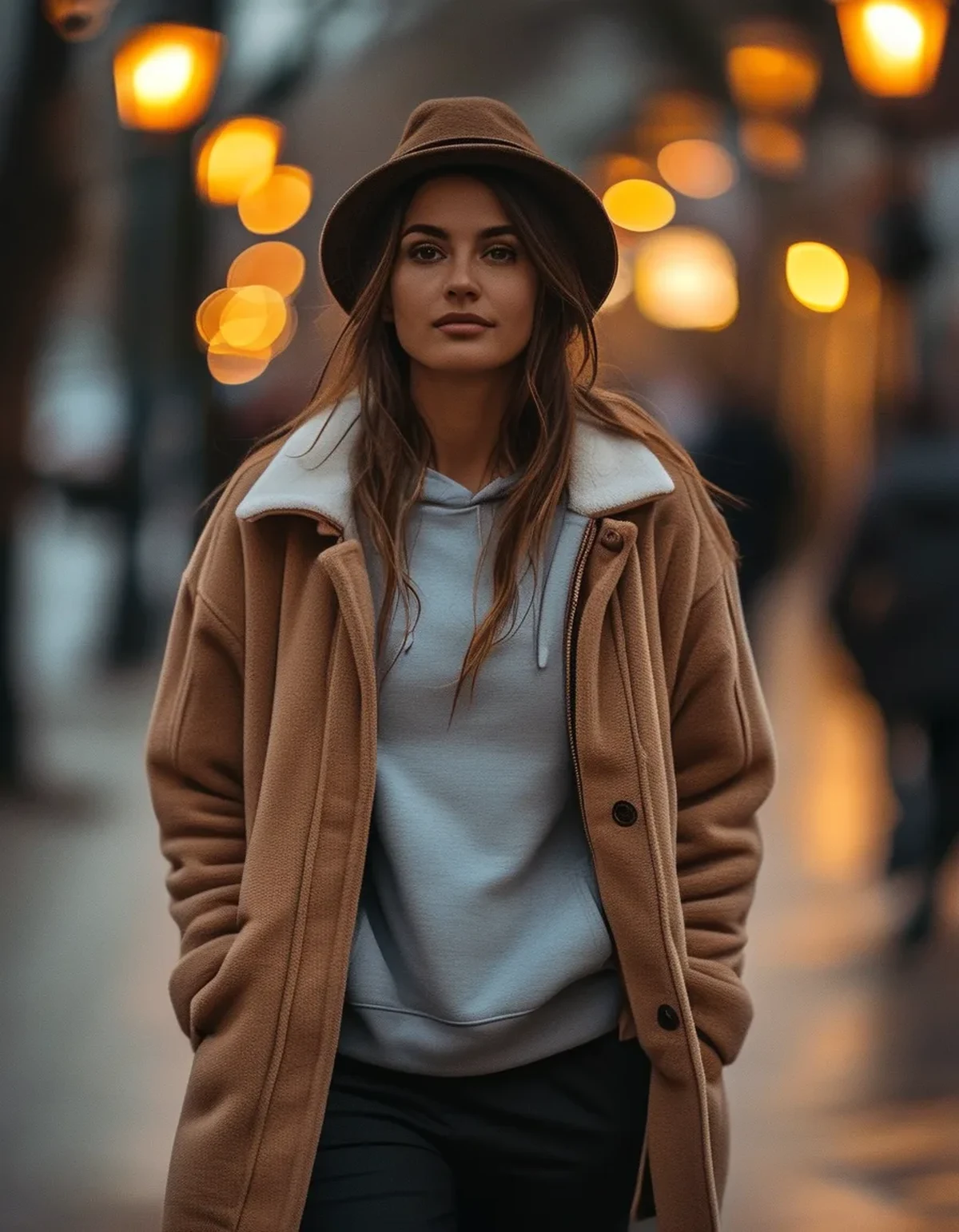
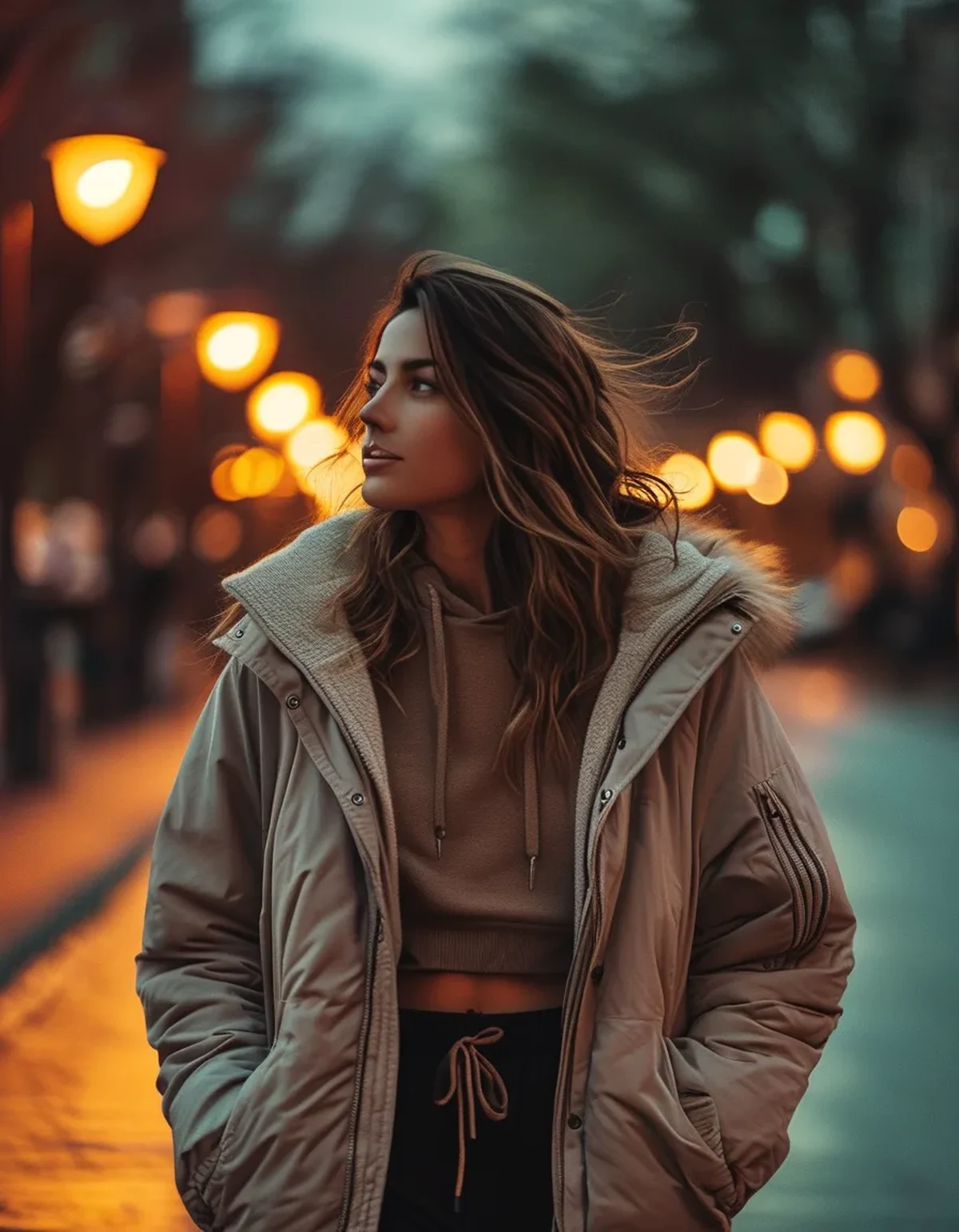
Visually, it is much cleaner. Athleisure worn out in the evening depends on looking deliberate rather than functional. Two thin layers under a jacket reads as being cold and dealing with it. One well-chosen jacket over a considered base reads as an outfit.
What makes a layer work here:
- Some structure - a bomber, a soft blazer, an oversized shirt jacket. Structure is what separates evening from gym
- A colour that works with the base, since it will be visible most of the evening
- Long enough to cover the hip if you are wearing leggings
- Easy to carry when it comes off
What does not work: a technical running jacket in a bright colourway, a hoodie of the same weight as the top underneath, or anything with a visible sports logo. All three read as function rather than intent.
The single most useful piece to own for this is a mid-weight jacket in a neutral - cream, camel, olive, or black depending on your palette. It converts almost any athleisure base into an evening outfit.
What should the base layer be?
Something with body, which is the detail that separates this from daytime.
Thin jersey is the giveaway. A standard cotton or thin performance tee reads immediately as casual daywear, particularly under evening lighting where the fabric looks flatter.
What reads as evening:
- Ribbed knit - the texture catches light and adds visible structure
- A heavier weight jersey with enough body to hold its shape
- Anything with a slight sheen - satin-finish or a technical fabric with subtle lustre
- A bodysuit, which stays smooth without adjustment and creates a cleaner line
On the bottom half: a thicker legging in a matte finish, a wide-leg trouser in a technical fabric, or a structured jogger. The common failure is a thin, shiny legging - it reads as gym under artificial light, where the sheen is much more visible than in daylight.
Fabric weight matters more in the evening for a practical reason too: thin fabric offers essentially no insulation, so a thin base under a jacket still leaves your legs cold. A mid-weight legging makes a real difference at 14 degrees.
On colour: evening lighting is warmer and dimmer, which flattens most colours and can make brights look muddy. Deeper tones, neutrals and anything with texture hold up better under streetlight and restaurant lighting than pastels or bright cool colours do.
What Nobody Tells You About Evening Athleisure
Five things that make the difference between considered and unprepared.
The shoes decide the whole outfit. More than any other element. A running shoe pulls everything toward gym regardless of what else you wear. A clean leather trainer, a loafer, or a boot pulls it toward evening. It is the single highest-leverage swap available.
Closed shoes matter more than you think at 14 degrees. Feet get cold fast when stationary, and cold feet end an evening faster than a cold torso. Late summer sandals are a daytime proposition once the sun is down.
Carrying the layer needs planning. A jacket you take off has to go somewhere - over a bag strap, over the back of a chair, or in your hands. A jacket that packs down small or has a hanging loop is genuinely more useful than one that does not.
Evening lighting changes fabrics substantially. Sheen becomes far more visible under artificial light. A legging that looks matte in daylight can look distinctly shiny under restaurant lighting - worth checking in a mirror at night before committing.
Pockets change how you stand. An outfit with no pockets means holding a phone all evening, which affects posture and how the outfit reads. A jacket with pockets solves it without adding a bag.
FAQ: Evening Athleisure Questions, Answered
Can I wear leggings out in the evening?
Yes, with the right supporting pieces - a mid-weight matte legging, a top with structure, a substantial layer, and non-athletic shoes. The legging is rarely the problem; thin shiny fabric and running shoes are.
What jacket works for the widest range of outfits?
A mid-weight bomber or shirt jacket in a warm neutral - cream, camel, olive or black. It goes over almost any base, adds structure, and reads as intentional rather than functional.
How do I stop looking like I came from the gym?
Three things in order: change the shoes, add a layer with structure, and choose a base fabric with texture or weight. The shoes do the most work by a considerable margin.
Should I bring a bag for the layer I take off?
If the jacket does not pack down, yes - or choose one that does. Carrying a bunched jacket for two hours is the practical failure mode that gets overlooked when planning the outfit.
What about the walk home specifically?
That is the coldest and windiest part of the evening, and it is what you should actually be dressing for. Closed shoes, a layer that covers the hip, and something for your hands if the walk is long enough.
TL;DR:
- Clear late summer evenings can drop 8-10 degrees between 7pm and 11pm, and it feels colder because you are stationary
- Dress for the cold end with one removable layer, not for the warm end
- One substantial structured layer beats two thin ones - thermally flexible and visually cleaner
- Base layers need body: ribbed knit, heavier jersey, or a bodysuit rather than thin jersey
- Shoes decide the whole outfit; closed shoes matter at 14 degrees
- Evening lighting exaggerates sheen, so check fabrics under artificial light before committing
Dress for the walk home. The dinner half takes care of itself.
See It in Motion
Seen here: High Waist Yoga Leggings with Inner Pocket — shop it on bubblelime.com
Keep Reading
This article is for general informational and styling purposes only. Fit, sizing, and product availability may vary.